Wedding Timeline Planner: Build a Schedule That Actually Works
A complete guide to building your wedding day timeline, with sample schedules, photography timing, and the buffer time most couples forget to add until they need it.
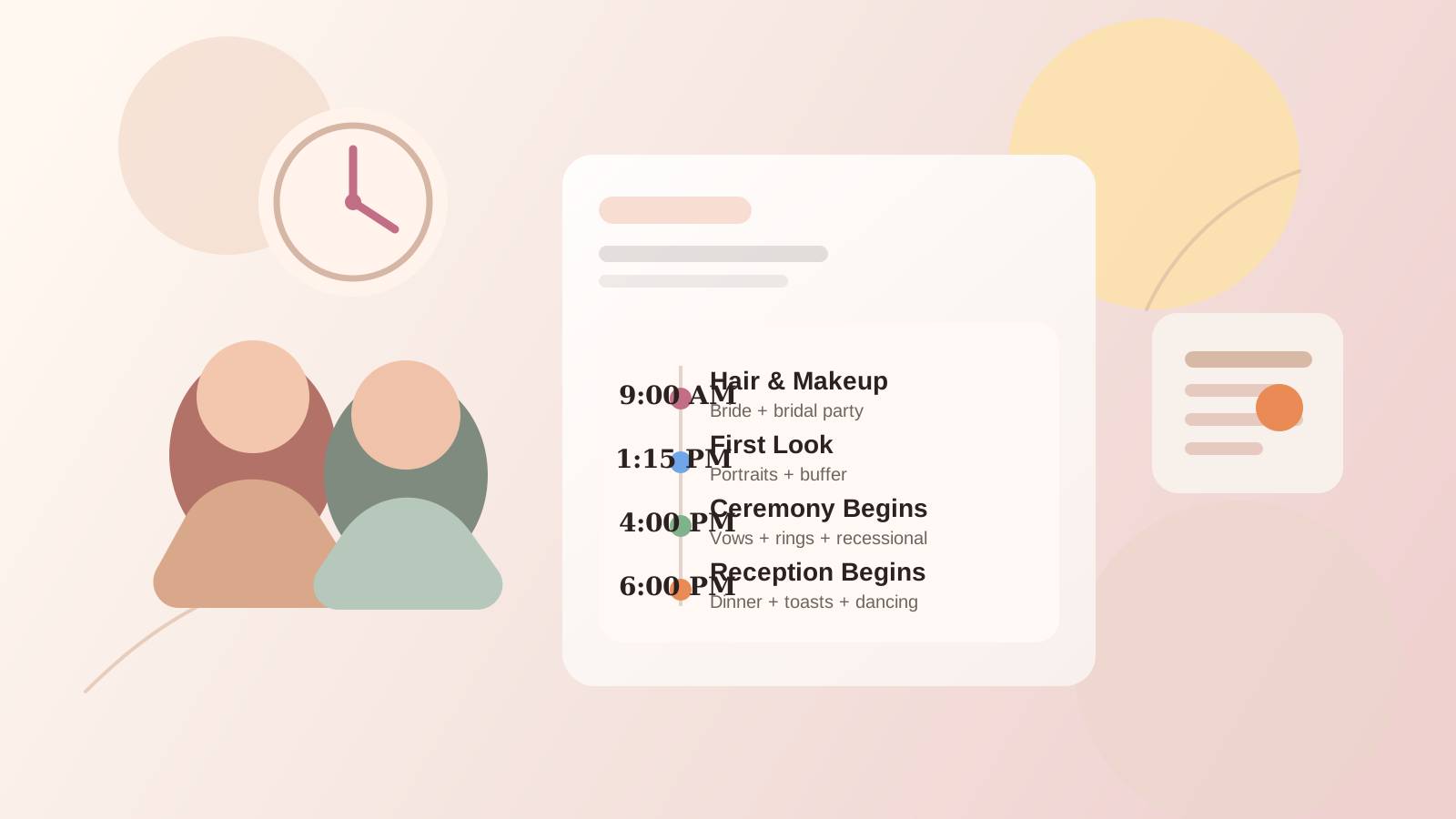
Your wedding day will be the most photographed, most anticipated, and most emotionally charged day of your life, and then it will be over in about 10 hours. The difference between a day that feels graceful and a day that feels rushed usually comes down to one thing: the timeline.
A good wedding day timeline is not just a schedule. It is the operating system for the day. It tells every vendor when to arrive, tells family members where to be, protects the ceremony start, creates room for portraits, and keeps the reception from losing energy because formalities were placed in the wrong spot.
This guide shows you how to make a wedding timeline that actually works: the building blocks every wedding day needs, sample schedules for different ceremony times, a getting-ready breakdown, a photography planner, and the exact mistakes that cause wedding day schedules to unravel.
Why Your Wedding Day Needs a Detailed Timeline
The Domino Effect of Running Late
Wedding delays are never isolated. Hair runs 20 minutes over. That pushes dressing. That pushes the first look. That shortens wedding party photos. That squeezes family formals. Then travel becomes stressful, the ceremony starts late, cocktail hour gets compressed, dinner service shifts, and suddenly you are paying for photography, entertainment, or venue overtime because the first problem was never absorbed.
This is why a wedding day schedule needs buffers, not just event labels. Without buffer time, every minor slip becomes a system-wide problem. With buffer time, a late beauty finish is annoying but survivable. The goal of a timeline is not perfection. The goal is resilience.
Who Needs a Copy of Your Timeline
The timeline is not just for the couple. Your coordinator needs it. Every vendor needs it. The wedding party needs it. Parents need it. Anyone responsible for rings, speeches, transportation, or family photo wrangling needs to know where they fit in the day. That is why the final timeline should be sent to every vendor at least two weeks before the wedding, and then sent again a few days out as a professional reminder.
If you are already working through the broader planning sequence, connect this page with How to Plan a Wedding so your wedding timeline planner is being built on top of real venue, vendor, and ceremony decisions instead of guesses.
Enter your ceremony time, venue setup, and party size to instantly generate a customizable wedding day schedule that is ready to print or share.
Build My Wedding Timeline →The Building Blocks of Every Wedding Day
No matter the guest count or ceremony time, every wedding day is built from the same underlying modules. If you understand those modules and why they take the time they do, building a wedding timeline template becomes much easier.
What happens: Hair and makeup, detail shots, steaming attire, getting dressed, touch-ups, and in many weddings the first look setup all live here.
Why it takes this long: Hair and makeup alone often takes 45 to 75 minutes per person. Add the bride, attendants, mothers, dressing time, and detail photography, and the full block disappears fast.
Most common mistake: Starting one to two hours too late and assuming everyone can still be ready without compressing photography or travel.
What happens: First look, couple portraits, wedding party photos, and sometimes a short list of family groupings happen before guests are seated.
Why it takes this long: Group photos take coordination time. Moving people, straightening outfits, adjusting bouquets, and changing groupings is what fills the hour, not just pressing the shutter.
Most common mistake: Thinking a first look plus full wedding-party coverage can be done in 30 minutes. It almost never can.
What happens: Guest seating, processional, vows, rings, pronouncement, recessional, and the immediate transition out of the ceremony space.
Why it takes this long: Even a short ceremony needs guest seating, music cues, and a clean processional. Religious services may run 60 to 90 minutes and should be planned as such from the start.
Most common mistake: Ignoring guest-seating time and assuming the ceremony can begin exactly at the invitation time without any lead-in.
What happens: Guests transition, find drinks and appetizers, mingle, and give the couple room to finish portraits or travel to the reception.
Why it takes this long: Guests need a real transition, not a rushed hallway pause. This block also gives planners, caterers, and venues time to reset and seat the reception room.
Most common mistake: Trying to squeeze cocktail hour under 60 minutes, which leaves no room for portraits, guest movement, or any recovery if the ceremony runs late.
What happens: Grand entrance, first dance, dinner, toasts, parent dances, cake cutting, open dancing, late-night food, and the last song.
Why it takes this long: Dinner service dictates the pacing more than couples expect. Plated meals, speeches, and formal dances can absorb the first 90 minutes before the dance floor really opens.
Most common mistake: Pushing too many formal moments too late into the evening, which delays dancing until guests are already losing momentum.
What happens: Lining up guests, distributing sparklers or bubbles, final photos, transportation handoff, and making sure personal items are already packed out.
Why it takes this long: A send-off needs setup, safety checks, and guest wrangling. If you wait until the venue is already at closing time, the exit becomes rushed or gets cut entirely.
Most common mistake: Scheduling the send-off exactly at venue close with zero margin for setup, cleanup, or one last round of photos.
Sample Wedding Day Timelines
These sample wedding day schedules are not meant to be copied blindly. They are meant to show you how the logic changes when the ceremony moves earlier, when the reception shortens, or when travel is part of the day.
4pm Ceremony - Evening Reception Timeline
This is the most common US wedding timeline because it preserves a relaxed morning, natural portrait light, and a full evening reception without forcing an extremely early start.
The big advantage is flexibility: you can fit in a first look, pre-ceremony portraits, and a true cocktail hour while still ending at a guest-friendly time.
Hair & Makeup Begins
Bride plus four attendants can realistically use the full morning here.
This is where delays start, so the block has to be generous enough to absorb touch-ups and late arrivals.
Photographer Arrives
Detail shots, invitation suite, flowers, shoes, rings, and candid prep photos begin.
Bride Gets Dressed
Dress, shoes, jewelry, veil, and portraits with anyone helping her dress.
First Look
Private reveal plus immediate couple portraits.
Wedding Party Photos
Full party, separate sides, and a few individual combinations.
Travel to Ceremony Venue + Buffer
Includes loading cars, actual drive time, and a calm arrival window.
Family Formals (Pre-Ceremony)
Immediate family and any groupings that are easier before guests crowd the couple.
Couple Hidden / Guests Seated
Final ceremony reset before the processional starts.
Ceremony Begins
Processional, vows, rings, pronouncement, and recessional.
Cocktail Hour Begins
Guests move to drinks while the couple finishes remaining portraits.
Golden Hour Portraits
A short escape for your best outdoor light of the day.
Grand Entrance & Reception Begins
Guests seated, introductions complete, and the formal evening starts.
Dinner Service & Toasts
First dance happens quickly, then dinner begins and toasts land while people are eating.
Parent Dances + Cake Cutting
Finish the remaining formalities before opening the floor fully.
Open Dancing Begins
The rest of the night belongs to the dance floor and guest interaction.
Grand Exit
Last song, guests line up, final photos, and departure.
Take the sample structure that feels closest to your wedding and open it in the timeline generator with the right ceremony-time preset already loaded.
Customize This Timeline for Your Wedding →Getting Ready Timeline: How Much Time You Actually Need
Hair and Makeup Time Breakdown
This is the most consistently underestimated block in any wedding day itinerary. Hair and makeup does not just take the beauty-artist minutes. It also takes touch-up time, room reset time, bathroom rotation time, and the human reality that groups are slower than individuals.
| Role | Hair | Makeup | Total |
|---|---|---|---|
| Bride | 60-90 min | 60-75 min | 2-2.5 hours |
| Each bridesmaid | 45-60 min | 30-45 min | 75-105 min |
| Mother | 45-60 min | 30-45 min | 75-105 min |
A simple working formula is: bride time plus attendant time plus at least 30 minutes of buffer. If you have more than three people receiving both hair and makeup, you are usually in two-stylist territory, not one-stylist territory. That extra team cost is often far cheaper than the overtime and stress caused by a delayed ceremony start.
Getting Dressed and Final Details
After beauty ends, protect 60 to 90 minutes for the transition into the dress, accessories, detail shots, and solo portraits. Couples often think of this as a 20-minute step, but it rarely is. The dress needs fastening, the veil needs placement, the photographer needs frames with hands helping, and everyone needs a minute to breathe before the next block begins.
First Look Timing
A first look is optional emotionally, but strategically it is the strongest lever in the wedding ceremony timeline because it pulls a large portion of portraits forward. If you are worried about feeling rushed, the first look is usually the cleanest way to create breathing room without cutting important coverage.
Wedding Photography Timeline: Every Shot, Timed
Photography is one of the best places to understand why the wedding timeline has to be engineered rather than guessed. Each photo category sounds short in isolation. But stacked together, the timing adds up very quickly, especially if you have a full wedding party, a long family list, or more than one venue.
| Coverage item | Typical time |
|---|---|
| Detail shots: dress, rings, shoes, invitations, florals | 20-30 min |
| Hair and makeup candids | 30-45 min |
| Bride gets dressed | 20-30 min |
| Bride solo portraits | 15-20 min |
| First look + couple portraits | 35-55 min |
| Wedding party coverage | 45-60 min |
| Family formals | 3-5 min per grouping |
| Golden hour portraits | 20-30 min |
| Reception coverage | Until the formalities and core dance floor are done |
Getting Ready Photos
Your photographer should usually arrive while beauty is still happening, not after everyone is nearly ready. That creates time for detail flat lays, candid prep, and a calmer story of the wedding morning.
Family Formals
Family formals are the hardest block to control because the time loss usually comes from gathering people, not from taking the photo itself. Pre-build the grouping list, send it to the photographer, and assign one family wrangler who knows the names and can find people quickly.
Golden Hour Portraits
Golden hour usually happens 30 to 60 minutes before sunset, and the light is worth protecting. If portraits matter to you, the wedding day timeline should acknowledge sunset explicitly. Otherwise the best light of the day gets swallowed by dinner or speeches without anyone noticing until it is gone.
How Many Hours of Photography Do You Need?
This is a quick planning calculator, not a contract quote. It helps you pressure-test whether an 8-hour package is enough or whether your wedding day timeline needs closer to 9.5 or 10 hours.
Check Sunset Time for Your Wedding Date
Use your wedding date and city to estimate sunset and your ideal golden-hour portrait escape.
Use the wedding day timeline generator to place beauty, portraits, family formals, golden hour, and reception coverage into one schedule your photographer can actually work from.
Build a Photo-Friendly Timeline →Wedding Reception Timeline: Flow That Keeps Guests Engaged
The core rule of a wedding reception timeline is simple: get the formal programming done within the first 90 minutes around dinner, then let the dance floor and guest interaction own the rest of the night. That is what keeps the reception from feeling over-produced.
Grand Entrance
Lineups, music cues, and introductions should feel tight. The room has energy right when guests sit down. Use it.
First Dance and Parent Dances
Place these early while attention is high. If you leave them too late, they interrupt the dance floor instead of launching it.
Dinner Service
Buffet, plated, and family-style dinners pace differently. This block is usually what determines how fast the rest of the reception can move.
Toasts and Speeches
Keep speakers brief and place the toasts during or immediately after dinner so they do not stall the party later.
Cake Cutting
This is mostly a cueing and photo moment. It should be short, efficient, and coordinated with the caterer.
Open Dancing
This is the emotional payoff of the reception, so it should own most of the back half of the evening.
Grand Exit
Treat it as a real block with prep time, not as a casual afterthought at the exact moment the venue closes.
The Most Common Wedding Timeline Mistakes
Most wedding day schedule problems are not mysterious. They are predictable patterns. If you avoid the mistakes below, your timeline already becomes much more durable.
Not Enough Buffer Time Between Blocks
They place every event back-to-back as if hair, photos, travel, and guest movement will all run perfectly on time.
One 20-minute delay in beauty turns into a late dressing start, a compressed first look, rushed family photos, and a stressed ceremony start.
Add 15 to 20 minutes of buffer after every major block. Unused buffer feels luxurious. Missing buffer feels expensive.
Scheduling Family Formals During Cocktail Hour
They put every family grouping after the ceremony because everyone is already present and it sounds simple on paper.
The couple misses the only unstructured social hour of the day, and so do the family members being photographed.
Move as many groupings as possible before the ceremony or keep the cocktail-hour list extremely short and pre-organized.
Underestimating Getting Ready Time
They budget the morning like hair and makeup is only for the bride or assume one beauty team can move much faster than normal.
Beauty runs long, dressing begins late, and the whole photo plan gets squeezed before the ceremony even starts.
If more than three people are getting beauty services, strongly consider two stylists working in parallel.
Forgetting Travel Time Between Venues
They add only the raw driving time from a map app and skip parking, loading, unloading, and traffic margin.
The couple arrives flustered, guests are already seated, and the ceremony starts under pressure or behind schedule.
Use drive time plus at least 15 minutes of operational buffer, and more if the area is unfamiliar or high-traffic.
Putting Toasts Too Late in the Evening
They postpone speeches until after dancing has already started or until guests have finished a long dinner and want momentum.
The room energy drops, guests get impatient, and the dance floor has to reboot from scratch.
Cluster toasts into dinner service or immediately after it, then let the dance floor take over the back half of the night.
Use the generator to add buffers, travel blocks, and custom events before the timeline gets sent to vendors. It is much easier to fix problems on a screen than on the wedding day.
Stress-Test My Timeline →How to Customize Your Wedding Timeline
A wedding timeline example is only useful if you know how to adapt it. These are the four pressure points that most often force the timeline to change.
Adjust for Guest Count
The more guests you have, the longer seating, buffet lines, family formals, and room flips take. A 40-person wedding can move quickly. A 180-person wedding needs more transition time at almost every step.
Adjust for Venue Distance
Drive time is only the core number. Add parking, loading, unloading, traffic uncertainty, and the reality that wedding groups rarely move like a single car.
Adjust for Sunset Time
If portraits matter, reverse-engineer the schedule around sunset. Golden hour happens whether or not your timeline made room for it.
Adjust for Religious or Cultural Ceremonies
Longer ceremonies, tea rituals, baraat processions, church gaps, or other traditions need to be planned as major blocks, not squeezed into standard western templates.
The best wedding timeline planner is the one that respects your actual ceremony type, your guest count, your venue layout, your sunset, and the people involved. That is why a template is the starting point, not the finished answer.
Start from a preset, then adjust ceremony time, reception length, bridal-party size, travel, and custom events until the schedule fits your wedding instead of someone else's.
Customize My Timeline →Conclusion
A wedding day timeline is not about making the day feel mechanical. It is about giving the day enough structure that emotions, photographs, and guest experience have room to happen without panic. The strongest schedules are not the ones with the most boxes. They are the ones with the right blocks in the right order and enough buffer between them to absorb real life.
If you remember only one thing from this guide, make it this: protect getting ready, protect travel, protect cocktail hour, and protect the first 90 minutes of the reception from bloat. Do that, and your wedding day schedule will work much more often than it fails.
Frequently Asked Questions
Use these quick answers when you need help pressure-testing a wedding ceremony timeline, reception timeline, or photography schedule.
How long should a wedding day timeline be?
A typical wedding day runs about 10 to 12 hours from the start of getting ready to the grand exit. The ceremony is usually 20 to 30 minutes, cocktail hour is 60 to 75 minutes, and the reception often runs 4 to 5 hours. The key is building 15 to 30 minutes of buffer between major blocks.
What time should I start getting ready on my wedding day?
Work backward from the ceremony start. A 4pm ceremony often means beauty starts around 9 or 10am if hair and makeup includes the bride plus attendants. You need time for dressing, detail photos, a first look if planned, and travel buffer before the ceremony.
How long should cocktail hour be?
Cocktail hour should usually be 60 to 75 minutes. That gives guests time to transition, get drinks, and mingle while the couple finishes portraits. In a two-venue wedding, extending it to around 90 minutes is often smarter.
How long should wedding speeches and toasts take?
Plan about 3 to 5 minutes per speaker and cap the total at roughly 15 to 25 minutes. The cleanest place for toasts is during or immediately after dinner service, not at the end of the night when guests are ready to dance.
When should golden hour photos be taken?
Golden hour usually begins about 30 to 60 minutes before sunset. Block 20 to 30 minutes during cocktail hour or early reception, then let your coordinator and DJ know when you will step away so guests stay occupied while you are gone.
More Free Wedding Planning Resources
The timeline works best when it is connected to the rest of your wedding-planning system. Use these guides and tools to keep the day-of schedule tied to vendors, budget, and the broader planning process.
Use the decision-order guide to understand what should be booked and finalized before the wedding-day timeline is built.
Move from the day-of schedule back to the month-by-month planning sequence that gets you there calmly.
Pair your timeline with a complete vendor list, booking order, and final confirmation workflow.
Overtime fees and rushed logistics usually trace back to budget decisions. This guide helps you pressure-test those tradeoffs.
Turn ceremony time, venue setup, and event flow into a full day-of timeline you can export and share.
Keep arrival times, contracts, and final payments connected to the schedule every vendor is working from.
Guest count affects ceremony seating, dinner pacing, and transportation timing more than most couples expect.
Use it when the timeline reveals extra staffing, overtime, transport, or photography coverage you had not budgeted yet.
Build the full wedding day schedule, export it, and send it to every vendor and family wrangler who needs to know exactly where to be and when.
Build My Wedding Day Timeline →Reviewed and updated March 30, 2026
Our editorial team researches wedding planning trends and cost benchmarks using reporting from The Knot, Zola, WeddingWire, venue and vendor pricing patterns, and real couple surveys. We review planning frameworks regularly so couples get guidance that is practical, current, and usable in real life.