Wedding Budget Breakdown: How to Allocate Money Without Regret
The exact percentages, real cost data, and the honest truth about where couples wish they had spent more and less.
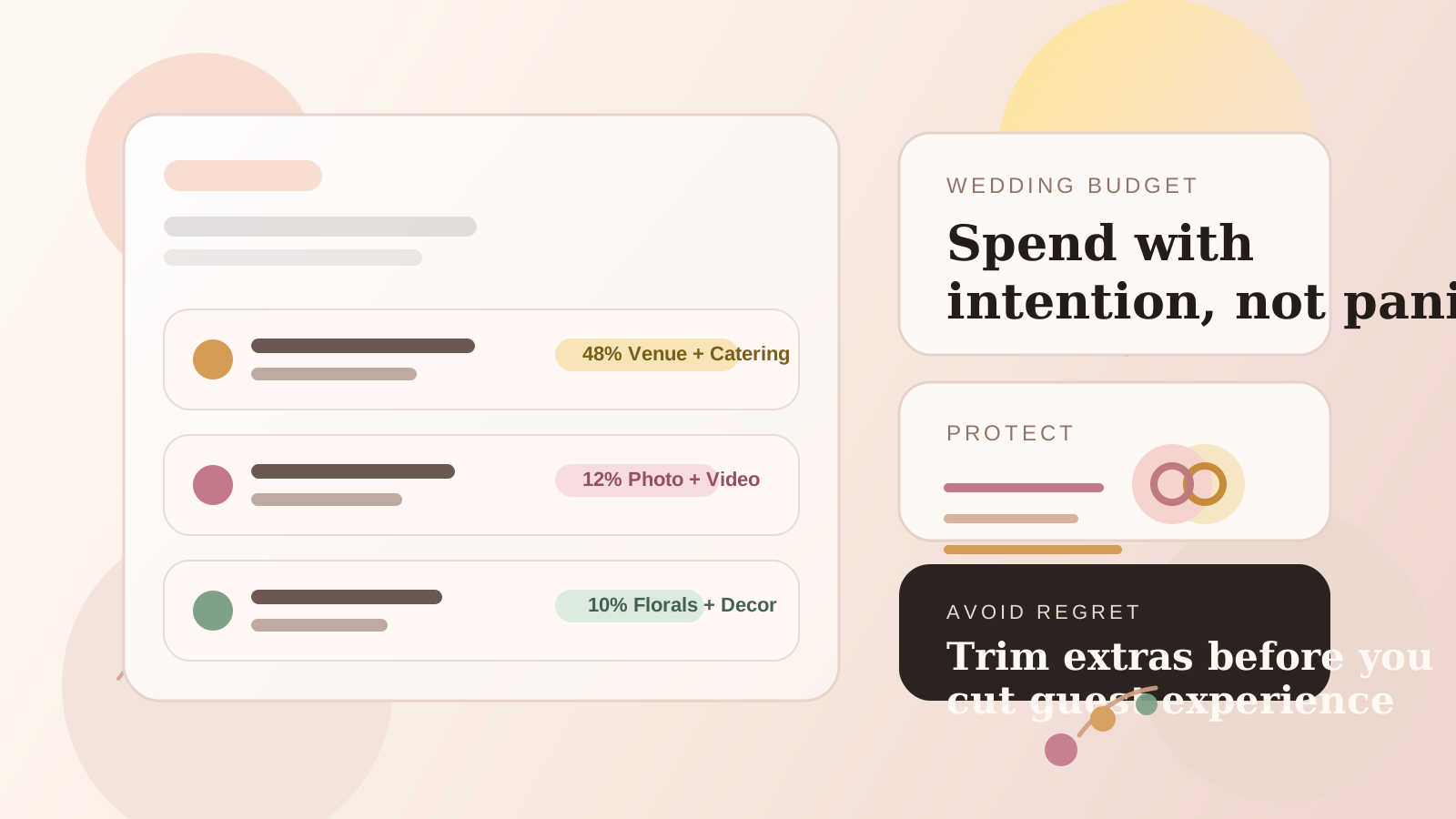
Most couples do not run out of wedding budget because they made one disastrous decision. They run out because they never built a clear wedding budget breakdown in the first place, underestimated what each category really costs, and kept saying yes to upgrades that felt small in the moment but huge in the total.
This guide gives you the wedding budget percentages experienced planners actually use, real cost benchmarks by category, and the clearest lens that matters most: what couples genuinely regret spending too little on and what they wish they had cut earlier.
Whether you are working with $15,000 or $75,000+, the principles are the same. Spend intentionally, protect the categories that shape memory and guest experience, and use a real tool instead of hoping the numbers stay in your head.
The Average Wedding Budget by Category (2025 Data)
What the Average US Wedding Actually Costs
The average wedding cost in the US still lands around $33,000 to $35,000, but that average hides two important realities. First, the median is lower, usually around $20,000 to $22,000, because luxury weddings pull the average upward. Second, guest count and market matter more than any national number. A 60-person wedding and a 180-person wedding do not belong in the same budgeting conversation.
The average guest count remains close to 117. The most expensive states are usually New York, New Jersey, and California, while smaller or lower-cost markets often make weddings in the $15,000 to $20,000 range far more realistic. If you want a fuller market context, use our Average Wedding Cost Guide. If you want to connect those costs directly to actual vendors, pair this with the Wedding Vendor Checklist.
The average is a reference point, not a target. A $20,000 wedding with 60 guests can feel far stronger than a $60,000 wedding with 200 guests if the money is allocated intentionally.
Average Cost by Wedding Category
This table gives a grounded wedding budget by category view against a $35,000 reference budget. The point is not to copy it exactly. The point is to see which categories naturally consume real money even when couples believe they are budgeting lightly.
| Category | National Average | % of $35K Budget |
|---|---|---|
| Venue | $8,573-$12,900 | 25-37% |
| Catering | $6,927-$8,750 | 20-25% |
| Photography | $2,900-$4,400 | 8-13% |
| Videography | $1,500-$4,000 | 4-11% |
| Florals & Decor | $2,000-$5,000 | 6-14% |
| DJ / Band | $1,000-$10,000 | 3-29% |
| Wedding Planner | $1,500-$8,000 | 4-23% |
| Attire (Dress) | $1,000-$3,500 | 3-10% |
| Hair & Makeup | $300-$650 | 1-2% |
| Wedding Cake | $300-$700 | 1-2% |
| Transportation | $500-$2,000 | 1-6% |
| Stationery | $400-$1,100 | 1-3% |
| Wedding Rings | $1,000-$5,000 | 3-14% |
Enter your total budget and guest count to get a personalized wedding budget breakdown by category and track every dollar as you book vendors.
Try the Free Budget Calculator →Recommended Wedding Budget Percentages
These wedding budget percentages are a framework, not a law. Your priorities can move them. But if you deviate too far from them, do it knowingly. That is how to budget for a wedding without ending up surprised by the tradeoffs later.
Adjust the total and use the framework below as your starting wedding budget breakdown. The numbers update instantly.
This is the largest line in almost every wedding budget breakdown because it covers the room, the food, the bar structure, and the service model guests will feel all day.
If this line is too high, reduce guest count or move the date before you compromise food quality. Venue and catering are the hardest costs to fake well.
Venue & Catering: 45-50%
This is the biggest line on almost every wedding budget breakdown because it covers the room, the food, the service structure, and a large share of what guests will actually experience. A strong venue sets the baseline. Good food makes the baseline feel worth it.
The best adjustment here is rarely lowering quality. It is reducing guest count or moving the date. That is because wedding venue cost and wedding catering cost scale with headcount far more directly than most couples expect.
Photography & Videography: 10-12%
Photography and video are where memory lives after the event is over. This is also why wedding photographer cost feels emotionally heavy during planning and perfectly rational later. Couples almost never regret having strong coverage. They often regret trying to save here first.
If you need to cut, protect photography quality and trim the video package scope. A simpler highlight reel is better than no moving record at all.
Music & Entertainment: 5-8%
Music is one of the clearest wedding spending priorities because guests feel it instantly. A strong DJ often outperforms a weak band, and clean sound matters as much as the playlist itself.
Florals & Decor: 8-10%
This is the category where couples overspend most often. Guests remember the room's mood, not the specific flowers on each table. Design for atmosphere, not item count.
Attire & Beauty: 8-10%
Budget the dress, alterations, shoes, jewelry, hair, makeup, and trials together. The dress alone is never the real total.
Stationery & Paper: 2-3%
This is one of the easiest places to cut wedding costs cleanly. Digital save the dates and simpler print specs create very little downside compared with the savings.
Transportation: 2-3%
Spend here only if the logistics require it. Functional guest movement is worth it. Fancy vehicles are optional.
Wedding Rings: 3-5%
Rings are one of the few purchases from this plan you use after the wedding. That makes them important, but many couples still prefer to save for them separately so they do not distort the celebration budget.
Wedding Planner / Coordinator: 5-8%
Full planning can be expensive, but coordination support is one of the best-value decisions in a modern wedding budget. If you cannot afford a planner, protect the coordinator.
Miscellaneous & Emergency Buffer: 5%
Never allocate 100 percent of the budget to planned expenses. Couples who skip the buffer almost always go over, not because of bad planning, but because weddings produce normal unpredictable costs.
Wedding Budget Breakdown by Total Budget
These sample budgets translate wedding budget percentages into actual numbers. They are not generic wedding budget templates copied from a spreadsheet. Each one reflects the real tradeoffs couples usually need to make at that spending level.
$15,000 Wedding Budget Breakdown
At this level, guest count is the main lever. Keep the wedding to roughly 50 to 60 guests, skip lower-priority categories, and spend for quality in the areas guests and you will remember.
| Category | % | Amount | Notes |
|---|---|---|---|
| Venue & Catering | 47% | $7,050 | 50-60 guests max; backyard, restaurant, or nontraditional venue. |
| Photography | 13% | $1,950 | 6-hour coverage, digital delivery only. |
| Attire & Beauty | 10% | $1,500 | Sample sale dress and simple hair and makeup. |
| Florals & Decor | 8% | $1,200 | Greenery-heavy design with selective DIY. |
| Entertainment | 7% | $1,050 | DJ only. No live musicians. |
| Officiant | 3% | $450 | Friend-officiated can reduce this further. |
| Stationery | 2% | $300 | Digital-first invitation strategy. |
| Cake & Desserts | 2% | $300 | Simple one-tier cake plus sheet cake. |
| Buffer / Misc | 5% | $750 | Still non-negotiable, even here. |
| Wedding Rings | 3% | $450 | Better handled separately if possible. |
| TOTAL | 100% | $15,000 | Balanced working budget example |
$25,000 Wedding Budget Breakdown
This budget can produce a very strong wedding for roughly 80 to 100 guests if you stay disciplined about decor, transport, and bar upgrades. It is also the first level where limited video or coordination support becomes realistic.
| Category | % | Amount | Notes |
|---|---|---|---|
| Venue & Catering | 46% | $11,500 | Mid-range venue with around 80-100 guests. |
| Photography | 10% | $2,500 | 8-hour coverage and full digital gallery. |
| Videography | 4% | $1,000 | Highlight reel only. |
| Florals & Decor | 8% | $2,000 | Ceremony focal point and 8-10 tables. |
| Attire & Beauty | 8% | $2,000 | Mid-range dress, alterations, and bridal beauty. |
| Entertainment | 7% | $1,750 | Reception DJ with optional ceremony sound. |
| Day-of Coordinator | 4% | $1,000 | Strongly recommended at this scale. |
| Wedding Rings | 2% | $500 | Can be supplemented with separate savings. |
| Stationery | 2% | $500 | Printed invites and digital save the date. |
| Transportation | 2% | $500 | Bridal party only or one short shuttle. |
| Cake & Desserts | 2% | $500 | Two-tier cake or compact dessert station. |
| Buffer / Misc | 5% | $1,250 | Tips, service gaps, and last-minute needs. |
| TOTAL | 100% | $25,000 | Balanced working budget example |
$35,000 Wedding Budget Breakdown
This is close to the national average wedding cost and is usually enough for a complete, high-quality celebration with roughly 100 to 120 guests, as long as each category is managed on purpose.
| Category | % | Amount | Notes |
|---|---|---|---|
| Venue & Catering | 45% | $15,750 | Around 100-120 guests with balanced hospitality. |
| Photography | 9% | $3,150 | 8 hours, no second shooter. |
| Videography | 4% | $1,400 | Highlight reel and ceremony audio. |
| Florals & Decor | 8% | $2,800 | Ceremony plus 10 tables, no oversized installs. |
| Attire & Beauty | 8% | $2,800 | Dress, alterations, and bridal beauty coverage. |
| Entertainment | 6% | $2,100 | 5-hour reception DJ and clean sound support. |
| Day-of Coordinator | 5% | $1,750 | Worth protecting if the guest count is above 90. |
| Wedding Rings | 4% | $1,400 | Both rings combined. |
| Stationery | 2% | $700 | Invites, postage, and a few day-of paper pieces. |
| Transportation | 2% | $700 | One shuttle or bridal party transport. |
| Cake & Desserts | 2% | $700 | Two-tier cake with serviceable portions. |
| Buffer / Misc | 5% | $1,750 | Tips, overtime, and emergency spend. |
| TOTAL | 100% | $35,000 | Balanced working budget example |
$50,000 Wedding Budget Breakdown
This range supports premium versions of the core categories without automatically becoming a luxury wedding. The biggest mistake here is spending the upgrade money on decor before you fully protect hospitality, media coverage, and planning support.
| Category | % | Amount | Notes |
|---|---|---|---|
| Venue & Catering | 45% | $22,500 | 130-150 guests or a stronger venue market. |
| Photography | 10% | $5,000 | 10 hours, second shooter, engagement session. |
| Videography | 5% | $2,500 | Full ceremony and highlight film. |
| Florals & Decor | 8% | $4,000 | Full floral design with selected statement pieces. |
| Attire & Beauty | 8% | $4,000 | Designer-leaning dress and expanded beauty support. |
| Entertainment | 6% | $3,000 | Higher-end DJ or compact live ensemble. |
| Wedding Planner | 5% | $2,500 | Partial planning or robust coordination package. |
| Wedding Rings | 3% | $1,500 | Often supplemented outside the wedding account. |
| Stationery | 2% | $1,000 | Printed suite with nicer paper stock. |
| Transportation | 2% | $1,000 | Guest shuttle or improved party transit. |
| Cake & Desserts | 1% | $500 | Still easy to keep efficient. |
| Buffer / Misc | 5% | $2,500 | Do not let decor consume this. |
| TOTAL | 100% | $50,000 | Balanced working budget example |
$75,000+ Wedding Budget Breakdown
At this level the percentage framework still matters. The most common mistake is not underfunding. It is spending heavily on visual excess while neglecting guest experience, pacing, or real contingency planning.
| Category | % | Amount | Notes |
|---|---|---|---|
| Venue & Catering | 44% | $33,000 | Premium venue and hospitality, or high-cost market. |
| Photography | 9% | $6,750 | Top-tier coverage with stronger deliverables. |
| Videography | 5% | $3,750 | Extended film coverage with premium editing. |
| Florals & Decor | 10% | $7,500 | Full design plan with room for installs. |
| Attire & Beauty | 7% | $5,250 | Designer wardrobe and full beauty team. |
| Entertainment | 7% | $5,250 | Premium DJ or strong live music package. |
| Wedding Planner | 5% | $3,750 | More planning support, but not at the expense of the buffer. |
| Wedding Rings | 3% | $2,250 | Often still tracked separately by many couples. |
| Stationery | 2% | $1,500 | Letterpress or foil becomes realistic here. |
| Transportation | 2% | $1,500 | Guest shuttle plus private transport. |
| Cake & Desserts | 1% | $750 | Enough for premium design without excess. |
| Buffer / Misc | 5% | $3,750 | Still required. Luxury weddings also overrun. |
| TOTAL | 100% | $75,000 | Balanced working budget example |
Take the sample budget that feels closest to your reality, then recalculate it with your actual guest count and priorities in the live calculator.
Build Your Custom Budget →Where Couples Overspend (and Where They Underspend)
The most useful wedding budget tips are not generic advice about being frugal. They are pattern recognition. Couples tend to overspend in categories that feel glamorous during planning and underspend in categories that prove their value after the day is gone.
The 5 Categories Where Couples Most Often Overspend
Flowers are the easiest category for scope creep. Each added arch, aisle cluster, candle layer, or upgraded centerpiece sounds small in isolation and expensive only when the whole proposal is added up.
Fix: Lock a full floral list before signing. If you want the room to feel richer, choose candles, greenery, and one focal statement instead of treating every surface as a design opportunity.
Couples overspend here because the emotional moment at the boutique feels bigger than the long-term value. Then alterations, shoes, veils, and accessories quietly push the total even higher.
Fix: Create one attire budget that includes the dress, tailoring, and accessories together. If the number feels uncomfortable, simplify before you buy.
A premium full open bar can absorb thousands of dollars without most guests noticing the difference between top-shelf and standard spirits.
Fix: Keep beer, wine, and one strong signature cocktail. Most guests remember whether the bar flowed smoothly, not whether every liquor shelf was fully stocked.
A dramatic multi-tier cake photographs beautifully but is often one of the least efficient guest-facing spends in the entire plan.
Fix: Use a smaller display cake with sheet cake in the back or a dessert spread that serves the same function with better value.
High-end print methods are beautiful, but they scale directly with guest count and are usually discarded after the event.
Fix: Keep the paper elegant but restrained, and move the saved money into photography, hospitality, or coordination.
The 3 Categories Where Couples Most Often Underspend
This is the most common post-wedding regret because photos cannot replay vows, speeches, or the emotional reactions around the room.
Fix: If the full film package is out of reach, budget at least enough for clean ceremony and highlight coverage.
Couples assume they can handle logistics themselves until the wedding day arrives and someone has to answer vendor texts, manage timing, and solve problems in real time.
Fix: If you cannot afford a full planner, protect room for day-of or month-of coordination.
Food is one of the things guests remember most clearly. Cutting too hard here often creates the kind of cheap feeling decor cannot fix.
Fix: If the catering quote is high, reduce guest count or simplify the menu before accepting a weak hospitality experience.
Reducing your guest count by 20 people often saves $3,000 to $5,000 in catering alone. That is enough to fund a videographer or protect your coordinator and contingency line at the same time.
What Couples Regret Most About Their Wedding Budget
When you strip away style trends and market differences, the pattern is remarkably consistent. Couples regret cutting corners on memory, flow, and hospitality. They regret overspending on things that looked impressive during planning but faded fast once the wedding was over.
Top Regrets: Spending Too Little On...
The categories below show up again and again in post-wedding reflections because they influence what couples can remember, how supported they felt, and whether the day felt easy instead of frantic.
Top Regrets: Spending Too Much On...
These categories are not always bad decisions. They just become regrets more often when the spend was emotionally driven instead of intentional.
These are the categories couples most often wish they had protected better.
"We thought photos would be enough. A year later we realized we could not hear our vows, our speeches, or the reactions from our families. We would pay for that footage now."
The pattern is consistent: couples skip video because it feels optional during planning, then wish they had the sound and motion once the day is gone.
"We hired a cheaper option to save money, and the images were fine but flat. Nothing about them feels like us. That is a hard thing to realize after the wedding."
Photography is one of the least regretted places to spend more because it preserves the part of the day you cannot recreate.
"I spent the first hours of the wedding answering questions instead of being present. My maid of honor became the operations manager, and neither of us got those moments back."
Coordination is less visible than florals during planning, but far more valuable once the event is in motion.
"Guests still talk about the food because it was weak for the price. We wish we had cut 15 guests and upgraded the meal instead."
Hospitality quality shapes guest memory in a way many design purchases do not.
"We went with the cheapest entertainment option and the room felt awkward most of the night. That changed the whole energy of the reception."
Entertainment is not background noise. It is one of the main drivers of how the wedding feels in real time.
These are the categories couples most often feel looked important during planning but mattered less afterward.
"We spent a huge number on centerpieces. Guests complimented them once and then moved on. We could have cut this in half and been just as happy."
Decor matters, but couples frequently cross the line from meaningful atmosphere into expensive visual overkill.
"I bought the dress in a very emotional moment. It was beautiful, but I wore it for six hours and wish I had put part of that money somewhere else."
A dress can absolutely be worth a splurge, but it is also a category where emotion regularly outruns long-term value.
"The giant cake looked great in photos, but most guests barely touched it. We could have gone much simpler without changing the experience."
Cake is one of the cleanest examples of a line item that looks important in planning but rarely carries the same weight afterward.
"We spent heavily on paper, foil, and inserts. Most guests tossed the suite after the wedding. It was not where the money should have gone."
Beautiful paper can set the tone, but it should not outrank photography, food, or coordination.
"We spent hundreds on custom favors and a lot of them were left behind at the end of the night. It felt like money that disappeared instantly."
Favors are easy to skip with almost no downside, which is why they are one of the safest lines to cut when the budget is stressed.
How to Adjust Your Budget When You're Over
If your current plan is over budget, do not start by shaving random amounts across every category. That usually creates a weaker wedding without actually solving the cash problem. Start with flexibility, then use guest count as the strongest lever, and finally get explicit about family money if that is part of the plan.
| Category | Flexibility | Best way to reduce |
|---|---|---|
| Venue & Catering | Medium | Reduce guest count or choose an off-peak date. |
| Photography | Low | Reduce hours or skip the second shooter before lowering quality. |
| Videography | Medium | Choose a highlight reel instead of a longer documentary package. |
| Florals | High | Swap flower volume for greenery, candles, and fewer large installs. |
| Attire | High | Use sample sales and simplify accessories. |
| Entertainment | Medium | Choose a DJ over a band and skip extra musicians. |
| Stationery | High | Go simpler on print and shift save the dates to digital. |
| Cake | High | Use a display cake plus sheet cake or desserts. |
| Transportation | High | Skip fancy vehicles unless guest logistics truly require transport. |
| Favors | Very High | Skip entirely with almost no downside. |
The Cut-First List
Start with the low-regret categories before you touch photography, hospitality, or coordination. These are the easiest cuts because they usually change the planning experience more than the actual wedding-day experience.
Go digital for save the dates, simplify print specs, and spend the difference on photography or food.
Use greenery, candles, and fewer statement pieces instead of building every table like a magazine spread.
Skip them entirely unless they genuinely add to the guest experience.
Use a smaller display cake with sheet cake or desserts in the back.
Use functional transport only where guest flow or safety actually requires it.
This is one of the few purchases that gains value after the wedding instead of losing it.
If you care about vows, speeches, and family reactions, do not be casual about this category.
Guest experience is built here. A beautiful room cannot save weak food or chaotic hospitality.
Protect the person who keeps the day running so you and your family do not have to.
Guests feel bad sound and weak pacing immediately, even if they cannot articulate why.
The Protect-at-All-Costs List
If you need to create room quickly, guest count is usually the first move. Every 10 guests removed can save roughly $1,500 to $3,000 once food, bar, rentals, and paper are all factored in. Cutting 50 guests can completely change what the wedding can afford without sacrificing the categories that matter most.
How to Have the Budget Conversation with Family
If family money is involved, define it like a vendor agreement. Confirm who is contributing, how much is real, whether that money comes with decision rights, and who covers the gap if costs rise above plan. A vague family contribution is not a working budget.
Run the new numbers before you cut anything. The calculator makes it easier to see how guest count, category changes, and buffer decisions affect the full plan.
Recalculate Your Budget →Wedding Budget Tips That Actually Work
A strong wedding budget template is only useful if you keep using it. These are the habits that actually prevent regret instead of just sounding good in theory.
Book vendors in priority order. Venue, photographer, and entertainment affect timing and cost structure more than favors or signage ever will.
Get three quotes for each category. You do not need endless shopping, but you do need enough market context to know when a quote is truly competitive.
Ask about package customization. Many vendors can remove albums, extra musicians, physical products, or added hours if you ask clearly instead of assuming the package is fixed.
Watch for scope creep. The most common overspend is not one catastrophic line item. It is many small upgrades added without asking what category is funding them.
Track every dollar in real time. A live budget tool is better than memory. If you are also managing deposits and balances by vendor, pair the calculator with the Wedding Vendor Tracker.
Build in the buffer every time. That 5 percent contingency is part of how to budget for a wedding well, not an optional luxury line.
Use the budget calculator to allocate money, then use the vendor tracker to keep deposits, contracts, and final balances visible while you book.
Budgeting for a wedding is not about spending as little as possible. It is about spending intentionally on the things that will still matter after the day is over.
Protect your photography. Book the videographer if you care about sound and memory. Hire the coordinator if you want the day to feel like an experience instead of a project. Then let go of the categories that look important during planning but do very little for the real outcome.
The couples who finish wedding planning without budget regret are rarely the ones who spent the most. They are the ones who allocated the most thoughtfully.
Frequently Asked Questions
These answers cover the questions couples ask most often when they are trying to build a realistic wedding budget breakdown and decide where the money should actually go.
What percentage of a wedding budget should go to the venue?
Venue and catering combined typically account for about 45 to 50 percent of the total wedding budget. On a $35,000 wedding, that usually means roughly $15,750 to $17,500 for the room, food, and related hospitality costs together.
How much should I spend on a wedding photographer?
Most couples should plan around 10 to 12 percent of the total wedding budget for photography and videography combined. Photography alone often lands around $2,900 to $4,400 nationally, and it is consistently one of the categories couples say they wish they had protected better.
What is a realistic wedding budget?
For many US couples, a realistic wedding budget still lands somewhere between $20,000 and $35,000 depending on guest count and market. Beautiful weddings can happen below that range too, but the key is not chasing an average. The key is allocating intentionally around your actual priorities.
What do couples regret most about their wedding budget?
The most common regrets are not hiring a videographer, underfunding photography, skipping coordination support, and overspending on decor, favors, or paper goods that looked important during planning but mattered less afterward.
How do I cut my wedding budget without ruining the experience?
The strongest cuts usually come from reducing guest count, choosing an off-peak date, simplifying florals, trimming paper upgrades, and skipping low-impact extras. Protect photography, hospitality quality, sound, and coordination before you cut the parts of the wedding guests and you will feel most clearly.
Keep going with the planning, vendor, and timeline articles that support the budget decisions in this guide.
A complete guide to printable wedding planning checklists, what to print by stage, and how to build a binder that stays useful.
A complete wedding day timeline guide with sample schedules, photography timing, and buffer logic that keeps the day running well.
A pillar wedding planning guide focused on the correct order for budget, guest count, venue, vendors, and final confirmations.
A complete wedding vendor checklist with category-by-category booking guidance, confirmation steps, and a printable workflow.
A complete month-by-month wedding planning guide covering budget, vendors, timeline, and the final week checklist.
A practical breakdown of average wedding cost by guest count, vendor category, and location pressure.
Use this vendor interview guide to compare photographers, venues, caterers, DJs, and planners with more confidence.
More Free Wedding Planning Resources
Use these tools to turn this wedding budget breakdown into a working system for budgeting, vendor tracking, and wedding-day execution.
Build a category-by-category budget and track real spending against the plan.
Keep contracts, deposits, balances, and vendor notes in the same planning system.
Turn your booked vendors and paid hours into a realistic wedding-day schedule.
Reviewed and updated March 30, 2026
Our editorial team researches wedding planning trends and cost benchmarks using reporting from The Knot, Zola, WeddingWire, venue and vendor pricing patterns, and real couple surveys. We review planning frameworks regularly so couples get guidance that is practical, current, and usable in real life.